

Choosing the wrong metal roofing gauge can lead to unnecessary material costs, installation challenges, or a roof that is not suited for its intended application. We help Florida contractors understand when 24 gauge, 26 gauge, and aluminum panels make the most sense so you can protect your reputation and deliver a roof that is built to last.
On This Page
- Your Reputation Depends on More Than Picking a Metal Roof
- What Does Metal Roofing Gauge Mean?
- Understanding 24 Gauge vs. 26 Gauge Metal Roofing
- Heavier Is Not Always Better
- Gauge Selection Depends on the Panel Profile
- Coastal Florida Requires More Than the Correct Gauge
- Why Florida Product Approvals Matter
- Common Gauge Selection Mistakes
- We Help Contractors Make the Right Recommendation
- Build Your Next Roof With Confidence
- Frequently Asked Questions
Your Reputation Depends on More Than Picking a Metal Roof
You are standing at the supply counter with a material list in your hand.
Your customer wants a roof that lasts.
Your crew wants materials that install efficiently.
Your budget has to stay competitive.
Then comes one of the most common questions we hear.
Should I use 24 gauge or 26 gauge metal roofing?
Many contractors assume heavier is always better.
It is not that simple.
The right answer depends on the building, the panel profile, the structural requirements, the project location, and whether the roof will face Florida’s harsh coastal environment.
Choosing the wrong gauge can increase project costs without adding value. It can also leave you with a roof that does not match the customer’s expectations.
We help contractors make that decision every day because we understand that your reputation depends on every roof you install.
What Does Metal Roofing Gauge Mean?
A metal roofing gauge refers to the thickness of the steel used to manufacture a panel.
With steel roofing, the lower the gauge number, the thicker the steel.
For example:
- 24 gauge steel is thicker than 26 gauge steel.
- 26 gauge steel is thicker than 29 gauge steel.
Although the difference between 24 and 26 gauge appears small, that difference can influence panel rigidity, impact resistance, and the applications for which a panel is commonly selected.
It is also important to remember that gauge alone does not determine overall roof performance.
A properly engineered roofing system also depends on panel design, substrate, fastening method, coatings, installation practices, and compliance with Florida Product Approval requirements.
Understanding 24 Gauge vs. 26 Gauge Metal Roofing
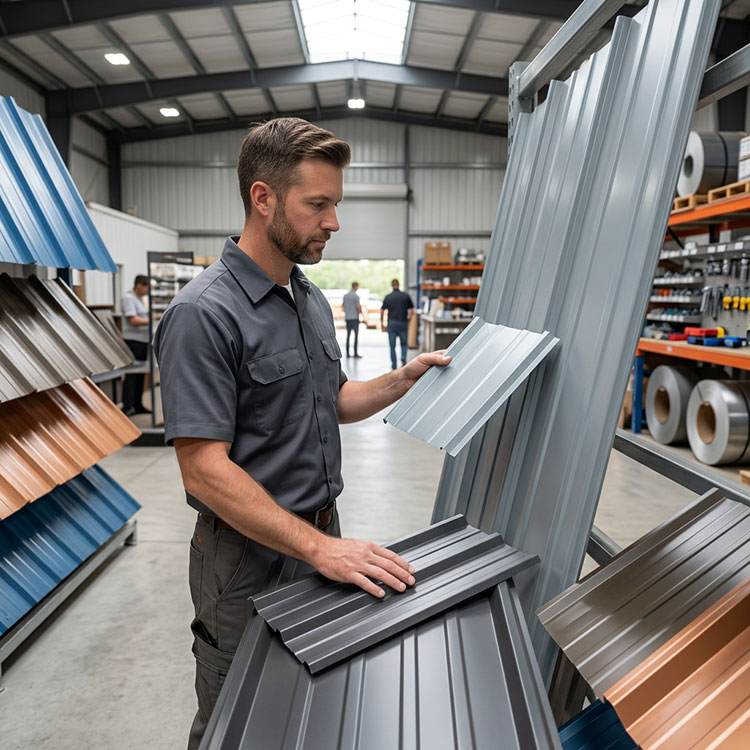
The majority of residential and commercial steel roofing projects throughout Florida use either 24 gauge or 26 gauge panels.
Both are excellent materials when used appropriately.
24 Gauge Steel
Because it is thicker, 24 gauge steel generally provides greater rigidity.
Many contractors prefer it for:
- Standing seam roofing
- High end residential homes
- Commercial buildings
- Projects requiring enhanced rigidity
- Architectural applications
Sunshine Metal Supply offers several products manufactured in 24 gauge, including SUN-PBR, SUNLOC standing seam panels, and 5V Crimp applications depending on the system selected.
26 Gauge Steel
Twenty six gauge remains one of the most commonly specified steel roofing gauges throughout Florida.
It offers an excellent balance between durability and project cost.
Applications commonly include:
- Residential roofing
- Agricultural buildings
- Light commercial projects
- Pole barns
- Garages
- Workshops
Many Sunshine Metal Supply products are available in 26 gauge, including SUNRIB, SUN-PBR, and 5V Crimp systems. For many projects, 26 gauge delivers outstanding performance while helping contractors stay within budget.
Heavier Is Not Always Better
One misconception we hear is that every customer should automatically choose the thickest panel available.
That is not always true.
Installing a heavier gauge panel where it is unnecessary may increase material costs without providing meaningful value for the homeowner.
Instead, we encourage contractors to evaluate several factors before making a recommendation.
Consider:
- Building type
- Roof geometry
- Wind exposure
- Panel profile
- Engineering requirements
- Customer expectations
- Budget
The right recommendation balances performance with value.
That helps you earn trust instead of simply selling the most expensive option.
Not sure which gauge fits your next project?
Bring us your plans before you order.
We will help you compare SUNRIB, SUN-PBR, SUNLOC Standing Seam, 5V Crimp, and Armored Coast™ options so you can recommend the right roofing system with confidence.
Request a quote today or stop by our Sarasota location. We are here to help you protect your customer’s investment and your reputation.
Gauge Selection Depends on the Panel Profile
Another mistake we see is assuming every panel profile should use the same gauge.
Different roofing systems serve different purposes.
For example:
SUNLOC Standing Seam
Standing seam roofing is often selected for premium residential and architectural applications.
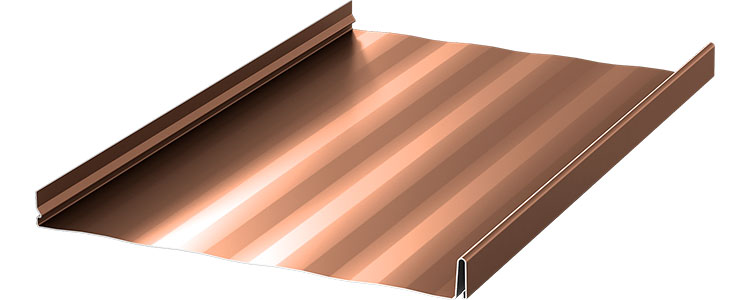
Sunshine Metal Supply manufactures SUNLOC panels from 24 gauge steel with concealed fasteners, a 16 inch panel width, and a recommended minimum roof slope of 2:12.
The heavier steel complements the premium nature of concealed fastener roofing systems.
SUN-PBR
SUN-PBR panels are available in both 24 gauge and 26 gauge steel.
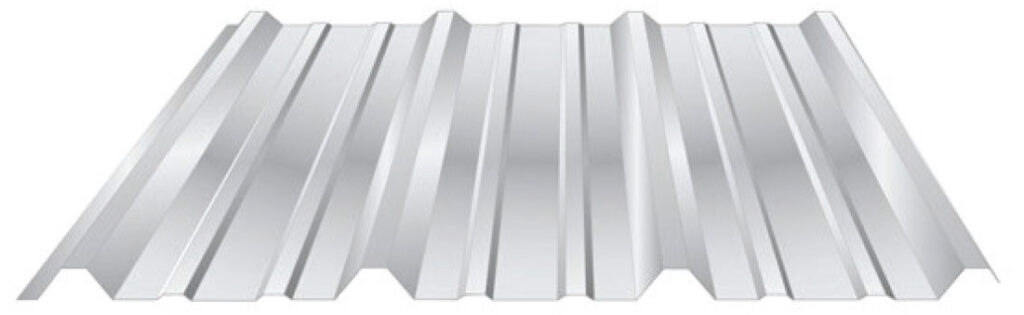
They feature:
- 36 inch coverage
- 1¼ inch rib height
- Roof and wall applications
- Exposed fastener design
This versatility allows contractors to select the gauge that best fits the project requirements while maintaining the same panel profile.
5V Crimp
Florida homeowners continue to choose 5V Crimp because of its traditional appearance and suitability for residential construction.
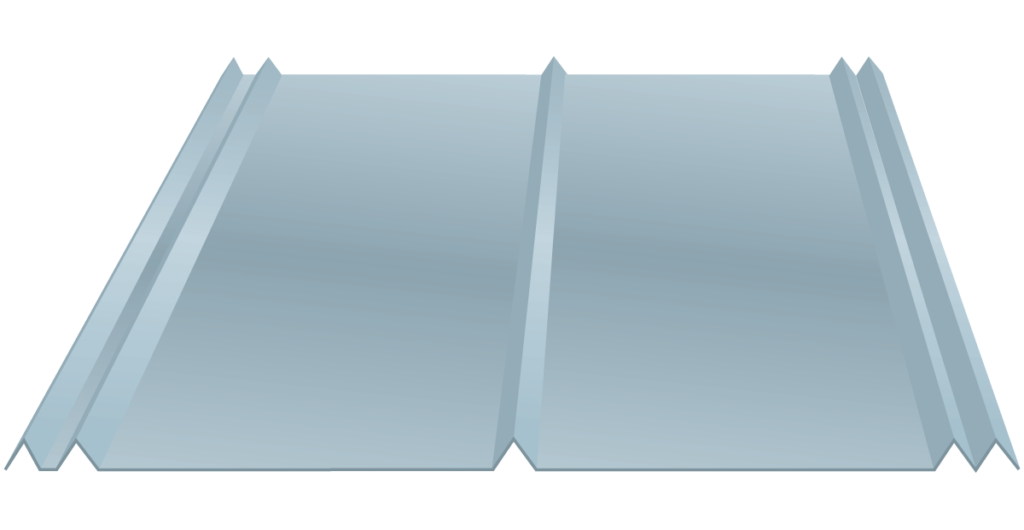
Sunshine manufactures 5V Crimp in both 24 and 26 gauge steel, along with .032 aluminum options. The panel features a 24 inch coverage width, exposed fastener system, and a recommended minimum roof slope of 2:12.
SUNRIB
SUNRIB remains one of the most popular exposed fastener profiles for residential, agricultural, and light commercial buildings.
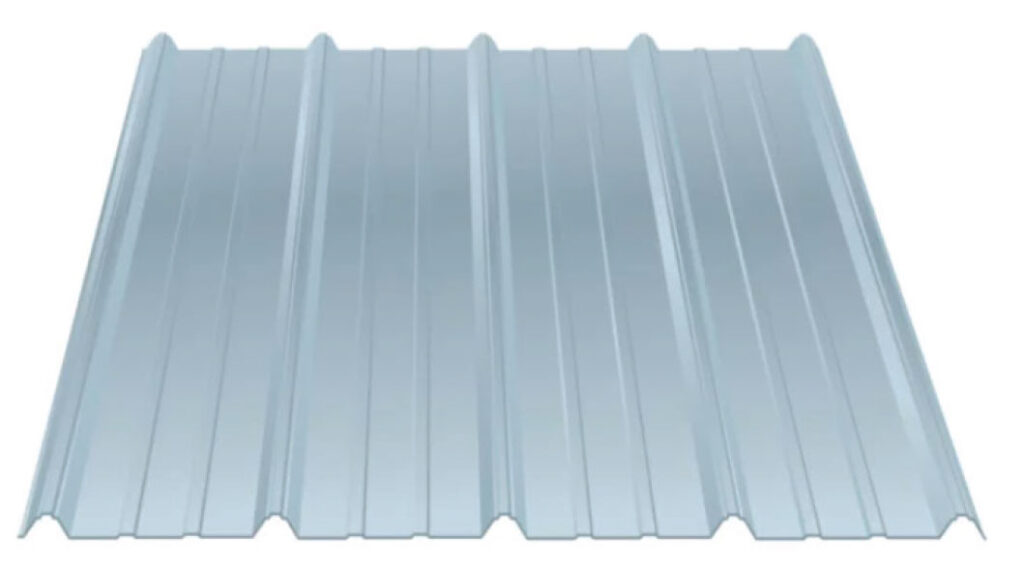
The panel offers:
- 36 inch coverage
- ¾ inch rib height
- 26 gauge steel
- Minimum roof slope of 1:12
- Florida Product Approval for approved assemblies
Its combination of durability and value makes it a dependable choice for many Florida roofing projects.
Coastal Florida Requires More Than the Correct Gauge
One of the biggest mistakes we see is focusing only on steel thickness.
Gauge matters.
But corrosion protection matters just as much.
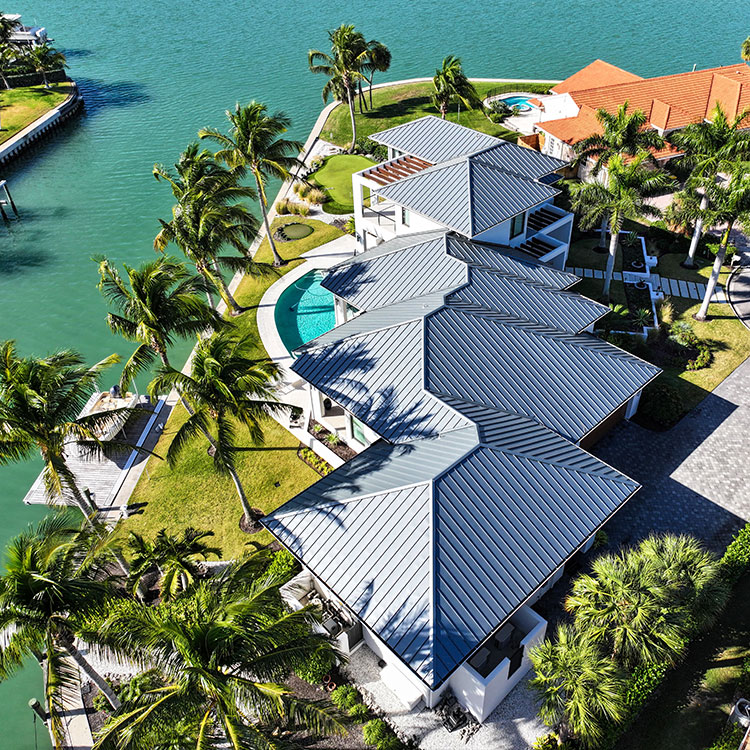
Along Florida’s Gulf Coast, salt air creates an aggressive environment for steel roofing.
That is why we often recommend looking beyond gauge and considering the protective coating applied to the steel.
For coastal projects, Sunshine Metal Supply offers Armored Coast™, manufactured using ZAM® coated steel.
According to East Lake Metals, Armored Coast™ incorporates ZAM®, a hot dip Zinc Aluminum Magnesium alloy coated steel sheet that provides enhanced corrosion resistance and cut edge protection compared to conventional coated steel products, making it well suited for coastal applications.
Selecting the proper coating helps protect the investment long after the installation is complete.
Why Florida Product Approvals Matter
Florida Product Approval is an important consideration for roofing projects throughout the state because approved roofing systems are evaluated for compliance with the Florida Building Code. Contractors should always verify that the complete roofing assembly matches the applicable Florida Product Approval before installation.
Choosing the correct gauge also means confirming that the complete roofing assembly complies with the approved application.
Many Sunshine Metal Supply roofing systems include Florida Product Approvals for specific installation assemblies, providing contractors with documented compliance for qualifying applications.
Always verify that the panel, substrate, fasteners, and installation method match the approved assembly for your project.
Common Gauge Selection Mistakes
Over the years, we have helped contractors avoid several common problems.
These include:
Selecting gauge based only on price
The least expensive panel is not always the most economical choice over the life of the roof.
Ignoring project location
A home located near Sarasota Bay faces very different conditions than one farther inland.
Forgetting about panel profile
Standing seam, exposed fastener, and architectural systems each have different design considerations.
Overlooking coatings
Corrosion protection often has a greater impact on long term performance than gauge alone in coastal environments.
Not asking questions before ordering
One conversation at the supply counter can prevent costly callbacks later.
That is why we encourage contractors to bring us their plans before placing an order.
We Help Contractors Make the Right Recommendation
Every project is different.
Some customers prioritize longevity.
Others have strict budgets.
Others want a premium standing seam roof that enhances curb appeal.
Our job is not to sell you the thickest panel.
Our job is to help you choose the roofing system that matches the building, the environment, and your customer’s expectations.
That includes discussing:
- Steel gauge
- Panel profile
- Florida Product Approvals
- Paint systems
- Coastal corrosion protection
- Trim packages
- Fasteners
- Delivery scheduling
That guidance helps reduce mistakes before materials ever leave our facility.
Because once the panels arrive on your jobsite, changing your mind becomes expensive.
Build Your Next Roof With Confidence
Choosing the right metal roofing gauge is not about buying the thickest panel available.
It is about selecting the right roofing system for the building, the environment, and the customer’s expectations.
We are committed to helping Florida contractors make those decisions with confidence. From explaining the differences between 24 gauge and 26 gauge steel to helping you compare standing seam systems, exposed fastener panels, and Armored Coast™ ZAM® coated steel, we are here to provide practical guidance backed by real product knowledge.
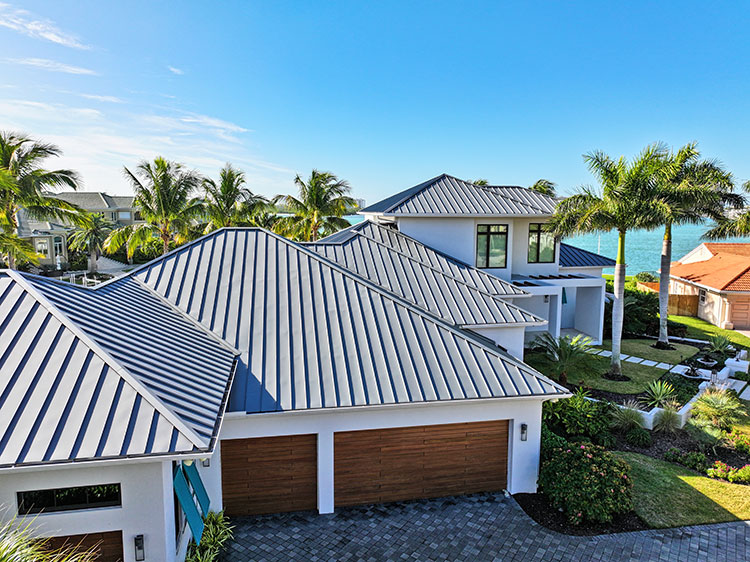
Your reputation is built one roof at a time. Let us help you choose materials that are Made to Last, Delivered Fast.
Ready to start your next project? Contact Sunshine Metal Supply today for a quote, discuss your plans with our team, or stop by our Sarasota location to compare panel options before you order.
Frequently Asked Questions
No. Twenty four gauge offers greater thickness and rigidity, but many residential and agricultural applications perform exceptionally well with 26 gauge panels when properly specified.
No. Corrosion resistance depends largely on the protective coating applied to the steel. Gauge and corrosion protection serve different purposes.
Products including SUN-PBR and 5V Crimp are available in both 24 gauge and 26 gauge steel for qualifying applications.
That depends on the project location, engineering requirements, and customer priorities. Coastal projects may benefit from discussing aluminum or ZAM® coated steel options before ordering.