

Metal roofing trim does far more than complete the appearance of a roof. Every trim profile serves a specific purpose by protecting vulnerable transitions, directing water away from the structure, and helping the entire roofing system perform as designed. Understanding where each trim belongs helps contractors reduce callbacks, improve weather resistance, and deliver a more professional finished product.
On This Page
- Why Metal Roofing Trim Matters
- What Is Metal Roofing Trim?
- Ridge Caps
- Hip Caps
- Drip Edge and Eave Trim
- Gable (Rake) Trim
- Valley Trim
- Sidewall Flashing
- Endwall (Headwall) Flashing
- Transition Flashing
- Fascia Trim
- Pipe Flashings and Penetration Trim
- Closures, Sealants, and Butyl Tape
- Choosing Trim That Matches the Roofing System
- Contractor Spotlight: Complete Roofing Systems from Sunshine Metal Supply
- Frequently Asked Questions
Why Metal Roofing Trim Matters
Contractors often spend considerable time selecting the proper panel profile, gauge, coating, and color. Those decisions are important, but they represent only part of a complete roofing system.
Every metal roof contains dozens of transitions where water naturally changes direction. Roof edges, ridges, valleys, walls, penetrations, and corners all create locations where improper detailing can allow moisture intrusion.
That is where metal roofing trim profiles become essential.
Rather than acting as decorative accessories, trim components direct water away from vulnerable areas while protecting exposed edges and helping maintain the roof’s weather resistance. Manufacturers design each profile for a specific location because no single trim can perform every function.
For contractors, understanding metal roofing trim means knowing which profile belongs at each transition before installation begins. That knowledge helps produce cleaner installations while reducing unnecessary field modifications.
What Is Metal Roofing Trim?
Metal roofing trim consists of factory-formed metal components that finish and protect the edges and transitions of a roofing system.
These components are typically fabricated from the same material and finish as the roofing panels to provide a consistent appearance while maintaining compatible performance characteristics.
Sunshine Metal Supply manufactures custom trim and flashing components that complement its residential and commercial roofing systems, helping contractors complete projects with matching accessories rather than relying on generic components.
Every trim profile serves one or more primary purposes:
- Managing water flow
- Protecting exposed panel edges
- Covering expansion gaps
- Sealing roof transitions
- Improving finished appearance
- Supporting long-term system durability
Without the proper trim package, even premium roofing panels cannot perform as intended.
Ridge Caps
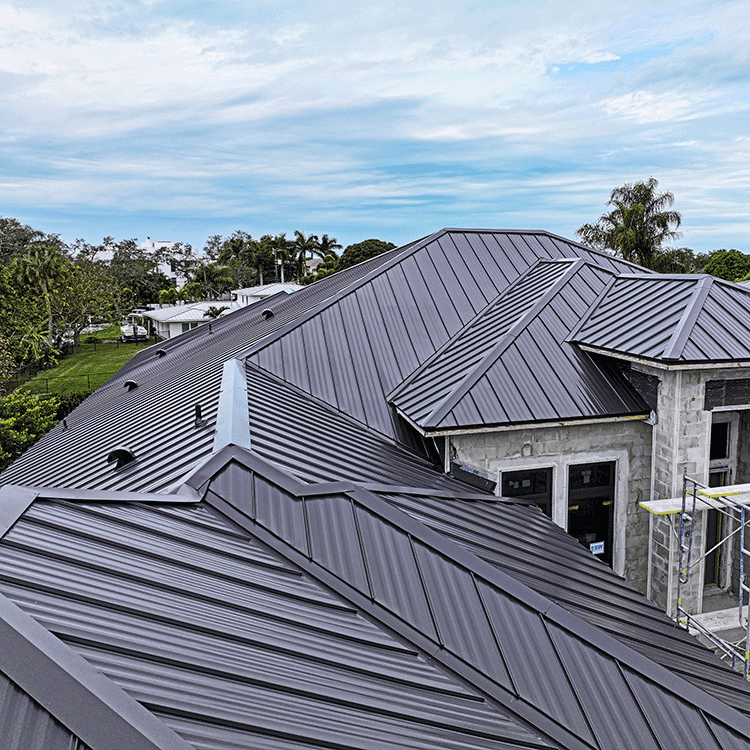
The ridge is the highest point where two roof slopes meet.
A ridge cap covers this joint while protecting it from wind-driven rain and debris.
On vented roof systems, the ridge cap also works with ridge ventilation products to allow continuous attic airflow while maintaining weather protection.
Standing seam systems frequently incorporate engineered ridge vent accessories such as Snap-Z™, which are designed specifically for standing seam applications. Snap-Z™ components fit between standing seam ribs while allowing the ridge cap to be installed above the vent assembly.
Proper ridge assemblies often include:
- Ridge cap
- Vent material when required
- Closures
- Sealant
- Fasteners
Each component helps keep water out while allowing the roof system to function correctly.
Hip Caps
Hip roofs contain outside angles where two roof planes meet.
Hip caps protect these intersections much like ridge caps protect roof peaks.
Because hips receive runoff from multiple roof sections, properly fitted hip caps help maintain consistent water shedding while providing a finished architectural appearance.
Hip caps are commonly fabricated to match the panel profile and roof color for a uniform appearance across the completed project.
Drip Edge and Eave Trim
The roof edge is continuously exposed to rainwater.
Drip edge and eave trim protect this critical area by directing water away from fascia components and into the gutter system or away from the building.
These profiles also protect panel edges from wind uplift while creating a clean starting point for panel installation.
Depending on the roofing profile, eave trim may incorporate closures or sealants to reduce wind-driven moisture infiltration beneath the panels.
Gable (Rake) Trim
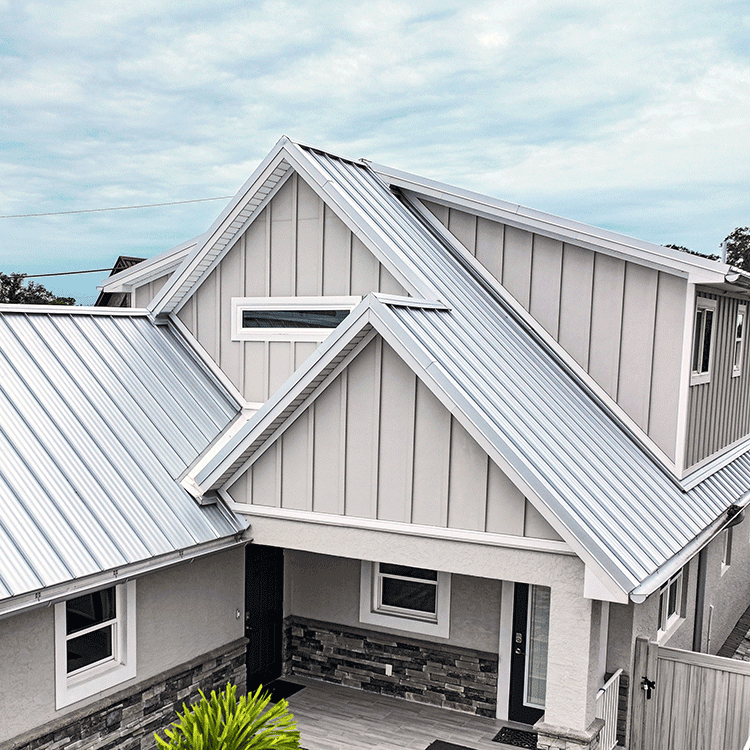
Gable trim, sometimes called rake trim, finishes the sloped edges of gable roofs.
Unlike the eave, rake edges experience significant wind exposure.
Proper rake trim helps:
- Protect exposed panel edges
- Improve wind resistance
- Direct water away from sidewall components
- Produce a finished appearance
Because Florida frequently experiences high wind events, properly fabricated rake trim becomes an important component of the completed roofing system.
Valley Trim
Roof valleys collect more water than nearly any other portion of the roof.
Whenever two roof slopes intersect to create an inside angle, runoff concentrates into the valley before flowing toward the eaves.
Valley trim provides a controlled drainage channel that safely carries this water without allowing it beneath adjacent panels.
Since valleys experience high water volume during heavy rainfall, proper fabrication and installation are essential.
Poorly detailed valleys often become one of the first locations where leaks develop.
Complete Roofing Systems Start with Complete Trim Packages
Choosing the correct roofing panels is only one part of building a dependable roofing system.
We help contractors simplify ordering by supplying matching trim, flashings, closures, sealants, fasteners, and accessories alongside our roofing panels. Whether your project uses SUNLOC standing seam, SUN-PBR, 5V CRIMP, or another Sunshine Metal Supply profile, we can help ensure every transition is completed with compatible components designed for the system.
Talk with our team before fabrication begins so your panel order and trim package arrive together, helping your crew stay productive from the first panel through final installation.
Sidewall Flashing
Whenever a sloped roof meets a vertical wall, that intersection requires a dedicated flashing profile to prevent water from entering behind the roofing panels.
Sidewall flashing covers the joint where the roof terminates against the wall while directing runoff back onto the roof surface. Properly installed sidewall flashing works together with underlayment and sealants to create a continuous weather-resistant transition.
Without correctly fitted sidewall flashing, wind-driven rain can migrate into the wall assembly, particularly during severe weather events.
Because every roof pitch and wall is different, we frequently recommend custom fabricated flashing to provide the best possible fit rather than relying on generic field modifications.
Endwall (Headwall) Flashing
Unlike sidewall flashing, endwall flashing is used where the roofing panels terminate directly into a vertical wall.
This profile diverts water away from the building and prevents runoff from flowing behind the roofing panels.
Proper endwall installations typically include:
- Endwall flashing
- Closure strips
- Sealant
- Compatible fasteners
Together, these components create multiple layers of protection at one of the roof’s most vulnerable transitions.
Transition Flashing
Some roofing systems include sections with different roof pitches.
Whenever one slope changes to another, transition flashing bridges the change while maintaining positive drainage.
Transition flashing helps:
- Redirect water
- Cover exposed panel terminations
- Maintain weather resistance
- Produce a clean finished appearance
Commercial buildings, additions, and architectural residential roofs commonly require transition flashings because multiple roof elevations often meet within the same structure.
Fascia Trim
Fascia trim protects the exposed face of the roof edge while providing a finished appearance.
Although gutters often receive the most attention along roof edges, fascia trim also contributes to protecting underlying framing members from weather exposure.
Matching fascia trim allows contractors to maintain consistent color throughout the roofing system while completing the roof perimeter with professionally fabricated components.
Pipe Flashings and Penetration Trim
Every penetration through a roof creates an opportunity for water intrusion.
Plumbing vents, exhaust stacks, mechanical equipment, electrical conduits, and similar penetrations all require properly designed flashing systems.
Pipe boots and penetration flashings create a flexible weather seal around these openings while allowing for limited movement caused by thermal expansion and contraction.
Because every penetration interrupts the roof surface, manufacturers generally recommend using flashing components designed specifically for the roofing profile rather than improvising field-fabricated solutions.
Closures, Sealants, and Butyl Tape Complete the Trim System
Many contractors think of trim only as the visible metal profiles around a roof.
In reality, closures and sealants play an equally important role in protecting the building.
Foam closures are commonly installed beneath ridge caps, eave trims, and other flashing profiles to match the panel shape while helping reduce the entry of wind-driven rain, insects, and airborne debris.
Premium butyl sealant tape is frequently used between overlapping metal components because it provides a continuous seal that remains flexible after installation. Direct Metals describes butyl tape as being designed to help prevent moisture, air, and dust infiltration in metal lap joints while maintaining long-term flexibility.
Color-matched sealants also help complete exposed joints where recommended by the manufacturer. Solar Seal® #900, one example carried by Sunshine Metal Supply, is designed for exterior applications requiring durable adhesion and weather resistance across a variety of construction materials.
When combined correctly, trim, closures, sealants, and butyl tape function as a complete weather management system rather than individual accessories.
Matching Trim to the Roofing Profile
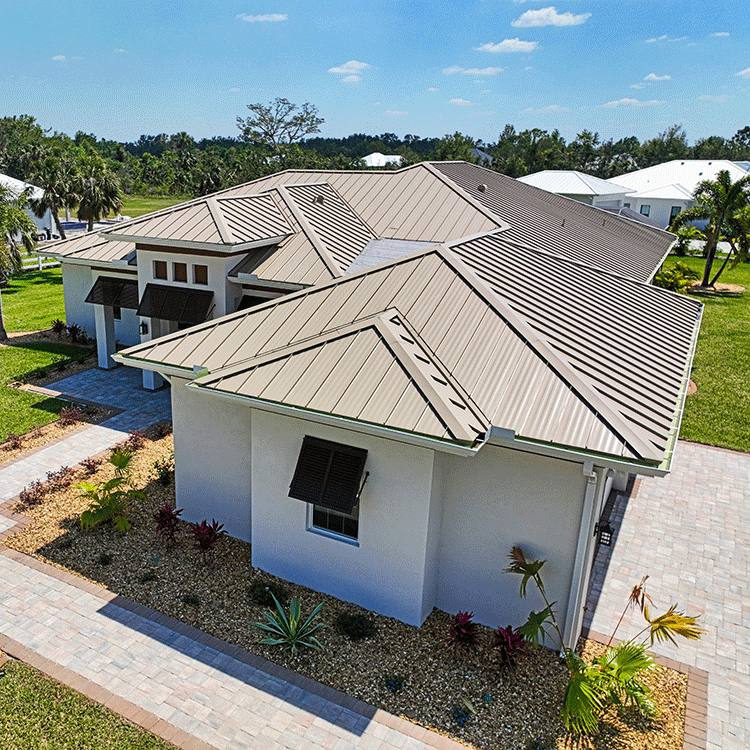
One of the most common mistakes we see is contractors attempting to use trim designed for one panel profile with another.
Panel geometry directly affects how trim components fit.
For example:
SUNLOC Standing Seam
SUNLOC panels utilize concealed fasteners, requiring trim profiles specifically designed to integrate with standing seam ribs while maintaining the clean architectural appearance expected from concealed fastener systems. Standing seam installations may also incorporate specialized accessories such as Snap-Z™ ridge ventilation systems where attic ventilation is required.
SUN-PBR
SUN-PBR panels feature a 36-inch coverage width with exposed fasteners for residential and commercial applications. Matching trim profiles are fabricated to align with the panel ribs while maintaining proper drainage and appearance. Florida Product Approvals make the SUN-PBR profile suitable for a wide variety of projects throughout Florida.
5V CRIMP
The 5V CRIMP profile has remained one of Florida’s most recognizable residential metal roofing systems. Because of its unique rib spacing, it requires trim specifically formed for the profile. Sunshine Metal Supply offers matching accessories for its 5V CRIMP roofing systems to help contractors maintain consistent fit and finish.
Selecting trim designed specifically for the panel profile helps reduce field adjustments while producing cleaner installations.
Coastal Projects Require the Right Trim Materials Too
When roofing projects are located near saltwater, contractors often focus on selecting corrosion-resistant panels. The trim package deserves the same level of attention.
Sunshine Metal Supply offers Armored Coast™ roofing systems featuring ZAM® coated steel developed by East Lake Metals. According to East Lake Metals, ZAM® is a hot-dip zinc-aluminum-magnesium alloy-coated steel that provides enhanced corrosion resistance and superior cut-edge protection compared to traditional galvanized steel. These characteristics make Armored Coast™ particularly well suited for coastal roofing applications. Contractors should specify compatible trim components, so the entire roof assembly is designed for long-term coastal performance.
Using the appropriate panel without considering the surrounding trim package can leave vulnerable transitions exposed to the same harsh environment the panels were selected to resist.
Proper Trim Selection Protects Your Reputation
Every successful roofing project depends on more than quality panels.
We have worked with contractors long enough to know that customers rarely notice perfectly installed trims. They do notice water stains around a chimney, wind-damaged rake edges, leaking valleys, or poorly finished roof transitions.
Those problems often trace back to selecting the wrong trim profile or omitting a critical flashing component.
That is why understanding metal roofing trim is as important as selecting the correct roofing panel.
A complete roofing system includes:
- Roofing panels
- Matching trim
- Flashings
- Closures
- Sealants
- Butyl tape
- Fasteners
- Ventilation components where required
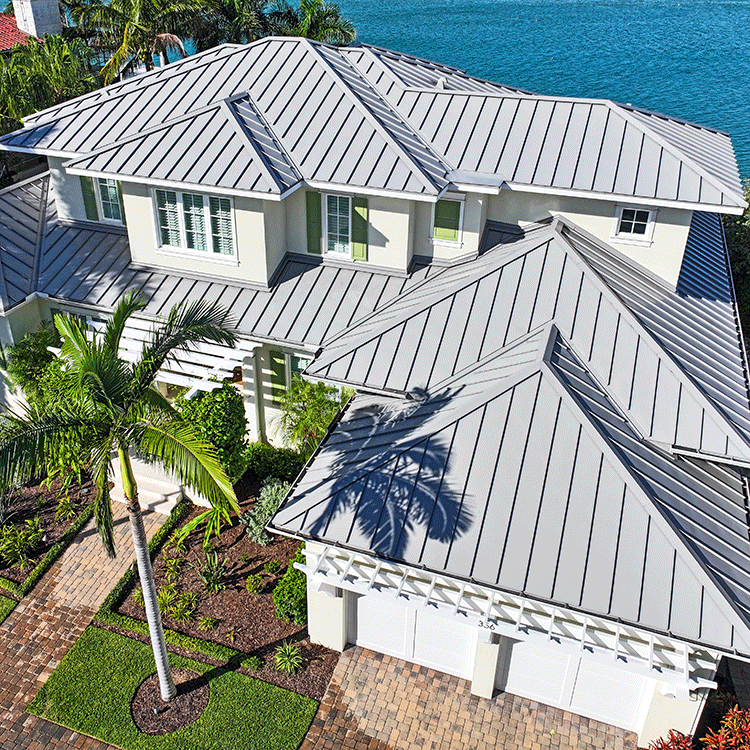
Each component has a specific purpose. When they work together, the roofing system performs as intended while presenting the professional appearance homeowners and building owners expect.
Contractor Trim Selection Checklist
Before ordering materials, we recommend reviewing these questions:
✔ Have we selected trim designed specifically for this panel profile?
✔ Does the project require ridge caps, hip caps, valleys, and rake trim?
✔ Are sidewall or endwall flashings needed?
✔ Does the roof include slope transitions requiring transition flashing?
✔ Have all roof penetrations been identified?
✔ Are compatible closures and butyl tape included?
✔ Have color-matched sealants been specified?
✔ For coastal projects, have we selected Armored Coast™ panels featuring ZAM® coated steel where appropriate?
Answering these questions before fabrication helps minimize installation delays and reduces the likelihood of return trips.
Why Contractors Choose Sunshine Metal Supply
Our goal extends beyond supplying roofing panels.
We work alongside contractors to help ensure every project includes the components necessary to complete the roofing system correctly.
Our product offering includes:
- Standing seam roofing systems
- SUN-PBR panels
- SUNRIB panels
- 5V CRIMP panels
- Sunshine Textured Metal Panels
- Custom fabricated trim
- Flashings
- Closures
- Fasteners
- Sealants
- Butyl tape
- Ridge ventilation accessories
- Coastal solutions featuring Armored Coast™ and ZAM® coated steel
Because many trim profiles are fabricated specifically for individual projects, coordinating the trim package with the roofing panel order helps simplify installation while improving overall project efficiency.
Whether your project is residential, commercial, agricultural, or located in Florida’s demanding coastal environment, we help contractors assemble complete roofing systems rather than individual products.
Ready to Complete Your Next Roofing System with Confidence?
Every successful installation begins before the first panel reaches the jobsite.
Our team can help you select the correct panel profile, matching trim package, compatible accessories, and corrosion resistant options for your specific project. From standard residential roofs to large commercial installations and coastal applications using Armored Coast™ with ZAM® coated steel, we are committed to helping contractors order complete roofing systems with confidence.
Contact Sunshine Metal Supply today to request a quote or speak with one of our roofing specialists about your next project.
Frequently Asked Questions
Metal roofing trim protects roof transitions, directs water away from vulnerable areas, covers exposed panel edges, and provides a finished appearance. Every trim profile is designed for a specific location within the roofing system.
A ridge cap is installed at the highest point where two roof slopes meet. It protects the ridge from weather while also covering ridge ventilation components when vented systems are used.
Valley trim creates a drainage channel where two roof slopes intersect. It manages concentrated water flow and helps prevent water from reaching the roof deck beneath adjacent panels.
Sidewall flashing is installed where a roof runs alongside a vertical wall. Endwall, sometimes called headwall flashing, is used where the roofing panels terminate directly into a vertical wall. Each profile is designed to manage water differently based on the direction of runoff.
Closures match the shape of the roofing panel to help block wind-driven rain, insects, and debris beneath trim components. Butyl tape provides a long-lasting seal between overlapping metal parts, helping reduce moisture infiltration.
Generally, no. Trim profiles are manufactured to fit specific panel geometries. Using trims designed for a different panel profile can create fitment issues that affect both appearance and weather resistance.
Many projects benefit from custom fabricated trim because roof dimensions, pitches, and transitions vary. Custom trim helps create cleaner installations while reducing field modifications.
According to East Lake Metals, Armored Coast™ utilizes ZAM® coated steel engineered for enhanced corrosion resistance in coastal environments. The zinc, aluminum, and magnesium coating helps protect exposed cut edges while providing improved resistance to saltwater corrosion compared to traditional galvanized steel. This makes it well suited for projects located near Florida’s coastline.